The Future Is for Everyone. But Who Gets to Shape It?
On August 10, Mark Zuckerberg wrote what I would describe as his AI manifesto, The Future is for Everyone, further adding to the boom-and-doom debate in the AI space.
At the centre of his philosophy are three points he sets out clearly: individual empowerment as the source of prosperity, invention as the primary purpose of superintelligence, and balance of power as the foundation of safety.
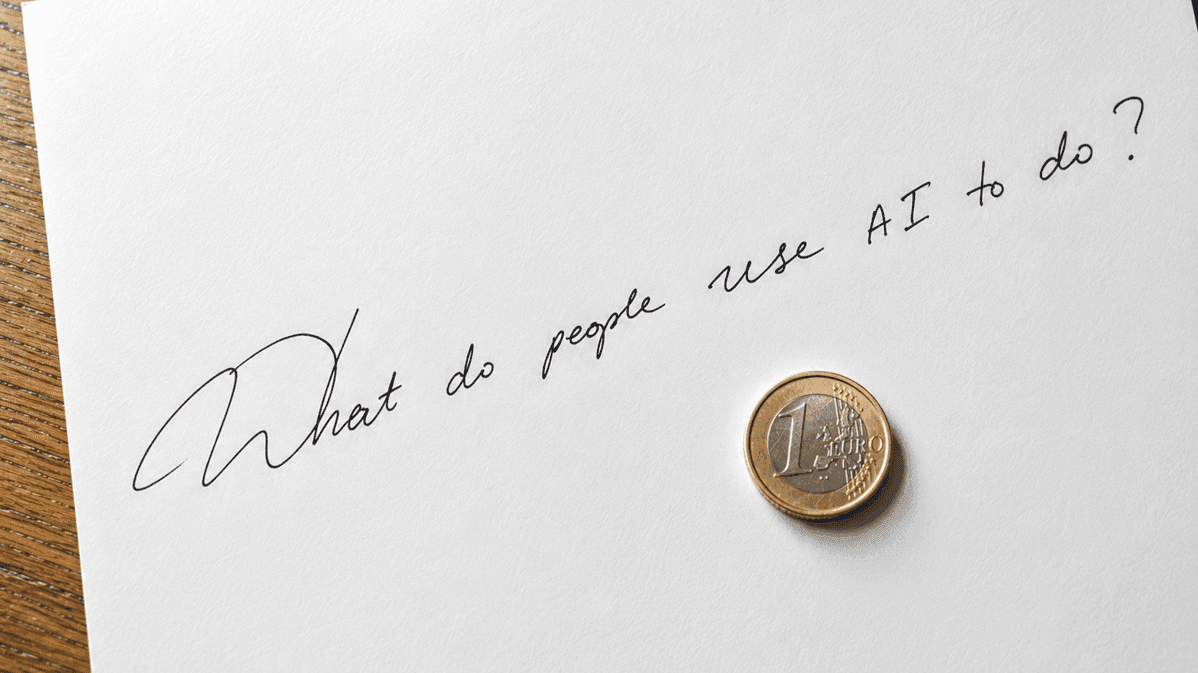
My thoughts on the article started on paper. AI helped me synthesise them and put them into writing much faster and more clearly than I probably would have done on my own. So perhaps you can already guess which side of the boom-and-doom debate I lean towards.
But in the process, I also discovered a danger.
The more I allowed AI to help develop my thoughts, the more it began to replace them with what it thought I should be saying. At some point, I had to stop and ask:
Is AI helping me to think, or is it beginning to think for me?
That distinction matters. In giving AI more ability to think for us, we may unknowingly give up some of the very agency we expect it to strengthen.
And that brings me to one word in Zuckerberg’s article that stayed with me:
Everyone.
It took my mind to George Orwell’s Animal Farm: “All animals are equal, but some animals are more equal than others.”
Not because Zuckerberg is suggesting that superintelligence should be available to some and not to others. His argument is the opposite. He sees broad access to superintelligence as a way of empowering individuals and preventing too much power from being concentrated in a few hands.
My question is what everyone means when everyone does not start from the same position.
Technological advancement has always been seen from the perspective of how it has benefited humanity. Imagine when the idea that man could move in a machine instead of walking was first conceived and the first automobile rolled onto the street. Certainly, it was not within the reach of everyone.
The same can be said of almost every major technological transformation. It may eventually become widely available, but it hardly ever starts with everyone having the same access or opportunity.
We already live in a world differentiated by environment, resources, education and opportunity.
If one person already has €1 and another has nothing, and everyone is then given €1, one person now has €2 and the other has €1.
Everyone received the same thing, but they did not start from the same position.
So what happens when everyone is given the same powerful technology, but everyone does not come to it from the same place?
Superintelligence is not €1, and AI itself could help people overcome some of the disadvantages they started with. It can help people learn, access knowledge and do things that might previously have required resources or expertise they did not have.
Perhaps that is part of its promise.
But it still leaves me thinking about the ordinary person.
Having access to AI is one thing. Understanding the possibilities that access creates is another. Two people can have the same AI in their hands and still make very different things out of it.
So when we speak about superintelligence for everyone, what determines who is able to turn that access into real opportunity?
And what happens to the gatekeepers?
My concern is that making superintelligence available to everyone may remove one gate without necessarily removing gatekeeping itself.
I am already using AI to write this article, yet as I write it, I am being offered access to a more capable reasoning model if I upgrade. I have access to AI, but there is another level of capability beyond what I currently have.
What costs money today may become freely available tomorrow. But technological transformation has often changed where the barriers sit rather than removing every barrier altogether.
With AI, those barriers could move beyond access itself to computing power, infrastructure, data, or the resources needed to turn intelligence into action.
So even if superintelligence becomes available to everyone, I am not convinced that the gatekeepers simply disappear. The more interesting question for me is where the gates will move.
And then there is the human part.
Innovation is a by-product of trying to solve problems. It comes from the curious mind asking how something can be done better and how a human problem can be solved.
That is the human spirit.
AI helped me do something with the thoughts behind this article. It helped me interrogate them and express them more clearly. But I also had to know when to stop it from taking over those thoughts.
Perhaps that boundary will become even more important as AI becomes more capable.
Despite the challenges humanity has encountered with previous technological advances, we have continued to find ways forward.
So perhaps the question is not only whether superintelligence will be available to everyone, but what everyone will make of that access and whether, as AI becomes more intelligent, we will retain the agency to keep thinking for ourselves.
Article originally written on August 16, 2026
Written by Mark Dekpe
Programmes Director Initiative for Development, Education and Learning