Evaluating the Results of Recent Digital Skills Training
Delta State Government House Staff Complete Digital Skills Training at IDEaL
As digital technologies continue to transform the workplace, public-sector employees require more than access to new tools. They also need the practical skills and confidence to use those tools effectively in their daily responsibilities.
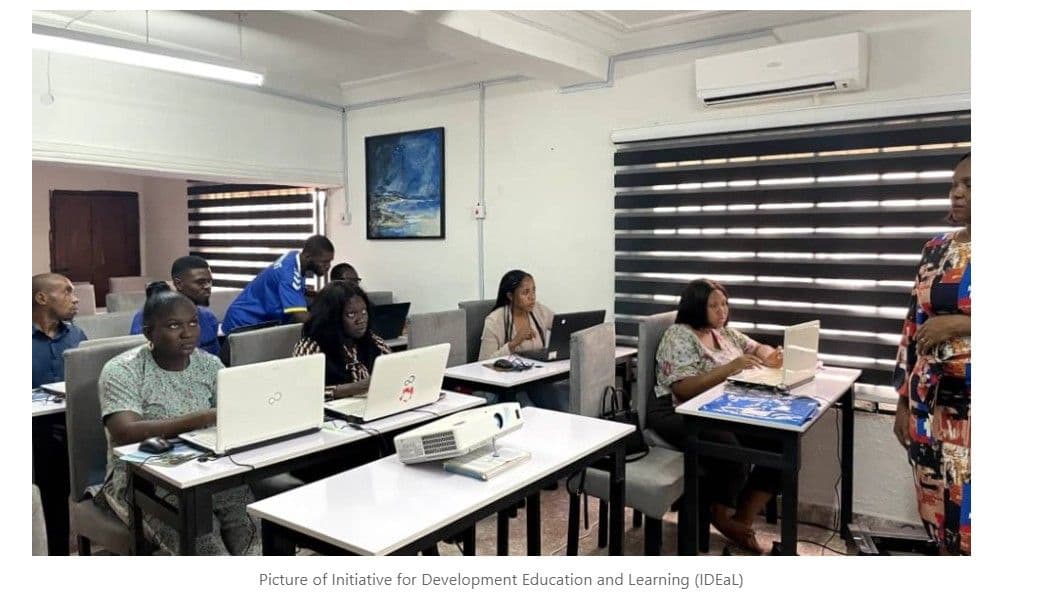
To support this need, staff of the Delta State Government House recently completed a three-day intensive digital skills training programme at the Initiative for Development Education and Learning (IDEaL) in Asaba.
The programme introduced participants to digital productivity, data-processing and collaborative technology tools. Beyond learning how to use these applications, participants examined how digital skills could improve their existing work practices, strengthen collaboration and support more efficient service delivery.
Building confidence through practical learning
The training combined instruction with practical exercises, giving participants opportunities to apply what they learned and discuss common workplace challenges. Learning as a group also enabled participants to share experiences, reflect on their current practices and identify areas for improvement.
Feedback from the participants indicated that the programme improved both their understanding of digital tools and their confidence in using them.
Omorere Paulina explained that the training provided deeper insights into digital skills and was beneficial to her work. Nathson Uchechukwo noted that the programme increased participants’ confidence in using the applications introduced during the training.
Destiny Sazi also commented:
“I recommend IDEaL for beginners and those who need retraining or additional training in IT.”
These responses demonstrate the importance of designing training programmes that address participants’ existing skill levels while providing knowledge that can be applied in the workplace.
Digital skills and public-sector development
The pace of technological change—including developments in artificial intelligence, cloud computing, data management and cybersecurity—is creating new opportunities for public institutions. At the same time, it is introducing risks that require greater awareness, planning and preparedness.
Continuous professional development is therefore essential. Public institutions need employees who can use digital tools productively, collaborate securely and adapt as workplace technologies change.
The training contributes to the skills-development objectives associated with the M.O.R.E. Agenda of the Delta State Government under the leadership of Governor Sheriff Oborevwori. It also demonstrates how collaboration between government institutions and local capacity-building organisations can help strengthen public-sector performance.
However, training should not be treated as a one-time activity. Its value becomes more sustainable when employees have opportunities to practise what they have learned, receive follow-up support and participate in additional training as technologies and workplace requirements evolve.
IDEaL’s continuing commitment
The Initiative for Development Education and Learning is a not-for-profit and non-partisan organisation committed to expanding access to education, professional development and capacity-building opportunities.
Through its training programmes and relationships with international examination providers, IDEaL supports learners, professionals and institutions seeking to develop relevant skills and obtain recognised qualifications. Its services include technology and language training, professional development and the delivery of international certification examinations.
The organisation remains committed to working with government institutions, private organisations and communities to strengthen digital capacity and widen access to learning opportunities.
The Government House programme forms part of IDEaL’s broader commitment to supporting a digitally capable workforce in Delta State. Future programmes will build on this experience by helping more employees and institutions develop the practical skills required for a changing workplace.
By Mark Dekpe
Programmes Director Initiative for Development Education and Learning Asaba, Delta State, Nigeria www.ideal-nig.org